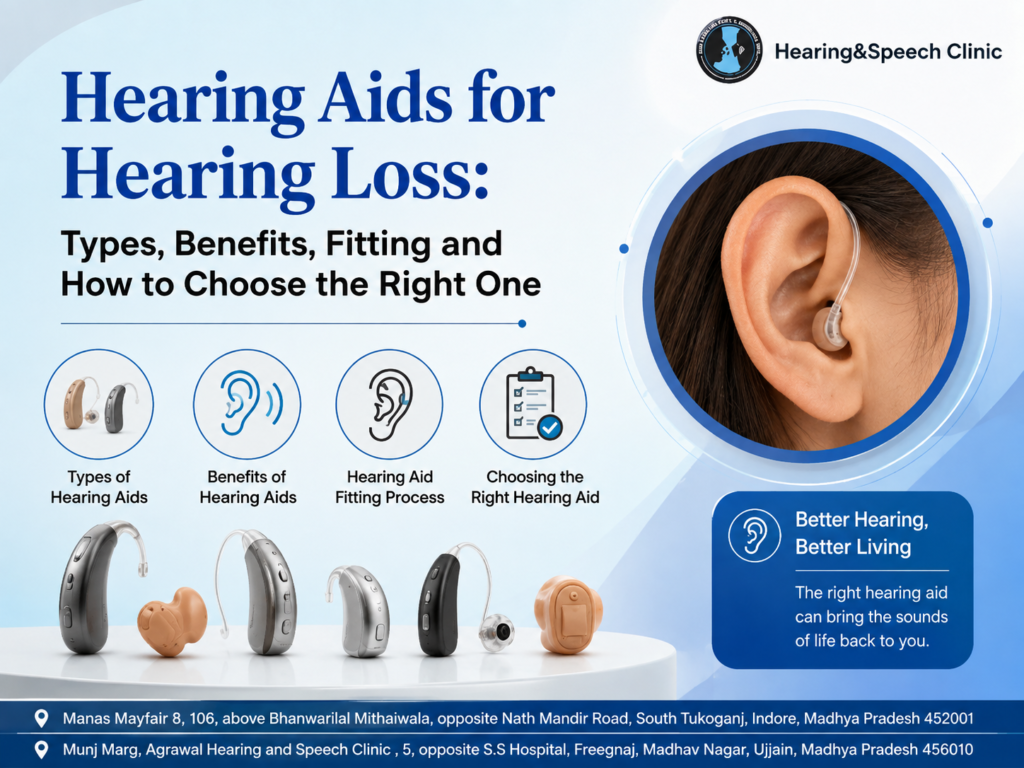
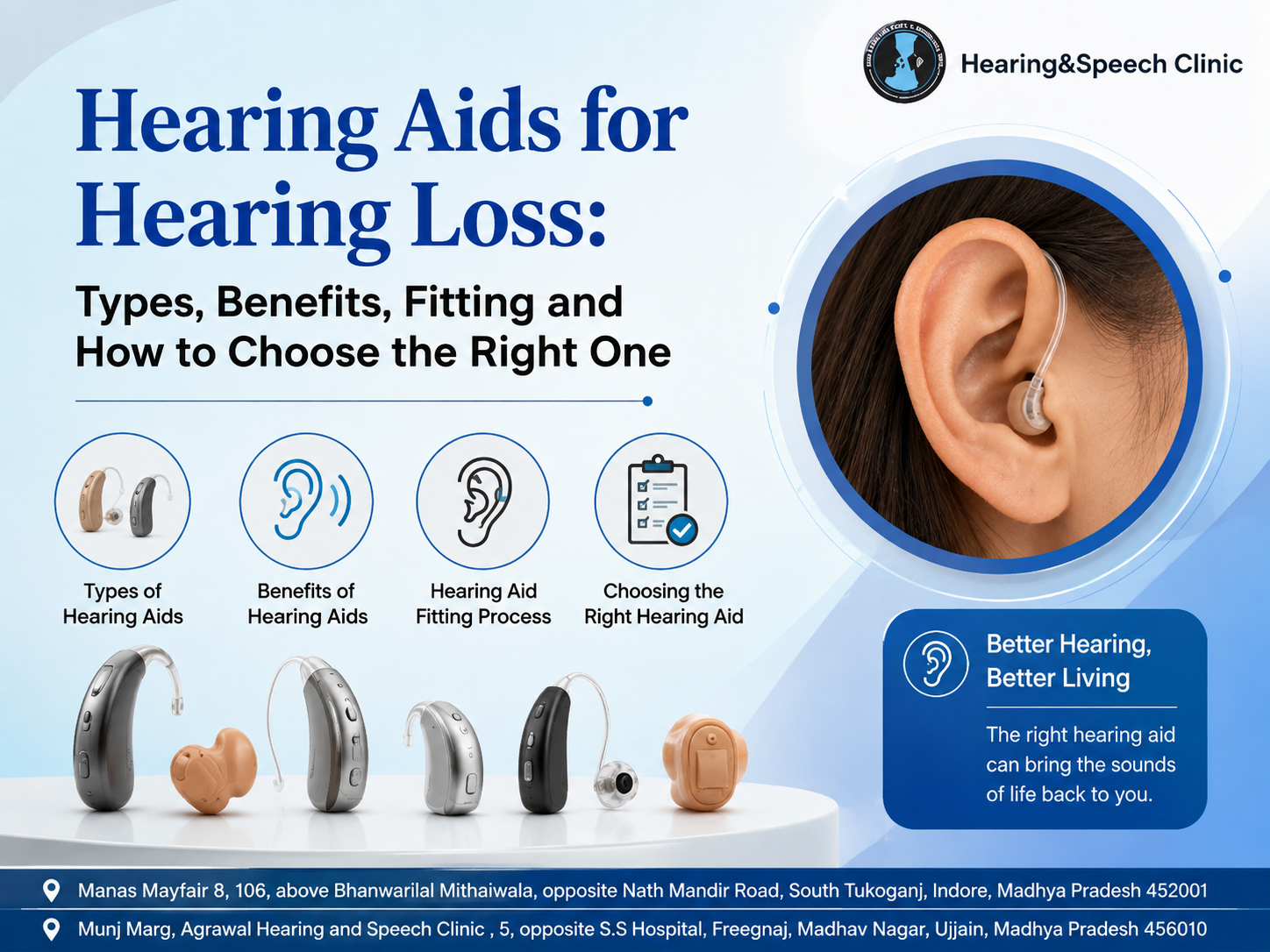
Have you started asking people to repeat themselves, increasing the volume of your television, or struggling to follow conversations in crowded places? Hearing loss can gradually affect communication, social interaction, work, and everyday independence. For many people with suitable types of hearing loss, a hearing aid can make speech and environmental sounds easier to hear. However, choosing a hearing aid is not simply about selecting the smallest or most expensive device. The right choice depends on the degree and type of hearing loss, lifestyle, listening needs, comfort, ear anatomy, and professional fitting.
For individuals searching for a Hearing Aid in Indore, professional hearing assessment should ideally come before selecting a device. An audiologist can determine the type and severity of hearing loss and help identify whether hearing aids are appropriate. Modern devices can provide features such as automatic sound processing, directional microphones, noise management, rechargeable batteries, and wireless connectivity, but these features are useful only when they match the user’s actual hearing and communication requirements.
At Agrawal Hearing and Speech Clinic, Anshul Agrawal, an experienced audiologist, provides hearing assessment and hearing-care guidance for children, adults, and senior patients. Located in South Tukoganj near Nath Mandir Road, the clinic focuses on detailed assessment, modern diagnostic tools, hearing rehabilitation, and patient-friendly guidance. Understanding the available hearing aid types, fitting process, trial period, adjustment, and maintenance can help patients make a more informed decision.
What Is a Hearing Aid and How Does It Help With Hearing Loss?
A hearing aid is a small electronic device designed to make certain sounds louder and more accessible to a person with hearing loss. Most hearing aids contain a microphone, processing or amplification system, and speaker or receiver. The microphone picks up surrounding sounds, the device processes them, and the receiver delivers the processed sound to the ear.
A Hearing Aid in Indore may help people hear conversations, television, doorbells, environmental sounds, and other important auditory information more easily. However, hearing aids do not restore normal hearing or completely eliminate all difficulties in noisy environments. Their effectiveness depends on the type and severity of hearing loss, appropriate programming, consistent use, and realistic expectations.
Who May Benefit From a Hearing Aid?
Not everyone with hearing difficulty requires the same type of hearing device. Some people may have mild hearing loss, while others may have moderate, severe, or profound hearing loss requiring different amplification strategies.
A hearing aid may be considered when hearing loss is affecting:
- Understanding conversations
- Telephone communication
- Workplace communication
- Family interactions
- Television listening
- Social participation
- Hearing in restaurants or groups
- Awareness of environmental sounds
An audiological evaluation is important because hearing aids need to be selected and programmed according to the individual’s hearing profile.
What Are the Different Types of Hearing Aids?
There are several hearing aid styles, and Hearing Aid in Indore selection depends on factors such as hearing loss, ear anatomy, dexterity, lifestyle, comfort, and desired features.
Common styles include:
Behind-the-Ear (BTE) Hearing Aids
BTE devices sit behind the ear and connect to an earmold, tubing, or another earpiece. They can be suitable for a wide range of hearing losses and are often valued for durability and ease of handling.
Receiver-in-Canal (RIC) Hearing Aids
RIC devices place the receiver closer to or inside the ear canal while the main body sits behind the ear. Their smaller design can make them appealing to many adults.
In-the-Ear (ITE) Hearing Aids
ITE devices are custom-made to fit within the outer ear. They can provide different levels of amplification depending on their design and the person’s hearing needs.
In-the-Canal (ITC) Hearing Aids
ITC devices sit partly inside the ear canal and are generally smaller than traditional ITE devices.
Completely-in-Canal (CIC) Hearing Aids
CIC devices fit deeply into the ear canal and can be less visible. However, their small size may make handling, cleaning, and battery replacement more difficult for some users.
The most appropriate style should be selected after hearing assessment rather than based only on appearance.
What Are Digital Hearing Aids and How Are They Different?
Digital Hearing Aids in Indore use digital processing to analyze and modify incoming sounds before delivering them to the ear. Unlike traditional analog amplification, digital technology can provide more flexibility in processing different frequencies and listening environments.
Modern digital hearing aids may offer features such as:
- Digital sound processing
- Directional microphones
- Noise management
- Feedback reduction
- Multiple listening programs
- Rechargeable batteries
- Smartphone connectivity
- Wireless audio streaming
Not every person needs every available feature. The useful features depend on hearing loss, lifestyle, communication requirements, and personal preferences.
Are Digital Hearing Aids Better Than Traditional Hearing Aids?
Digital technology provides greater flexibility for programming and sound processing, but “better” depends on the user’s individual requirements.
For someone who regularly participates in meetings, travels frequently, uses a smartphone, or spends time in noisy environments, certain digital features may be useful. Another person may primarily need straightforward amplification for conversations at home.
The goal of Digital Hearing Aids in Indore should not be to select the device with the largest number of features. Instead, the device should provide appropriate amplification and useful features for the person’s actual listening needs.
How Does an Audiologist Decide Which Hearing Aid Is Right for You?
Choosing a Hearing Aid in Indore should begin with a comprehensive hearing evaluation. An audiologist assesses the degree and type of hearing loss and considers how it affects the person’s everyday communication.
Important factors include:
- Degree of hearing loss
- Type of hearing loss
- Hearing in each ear
- Age
- Ear anatomy
- Communication requirements
- Lifestyle
- Workplace environment
- Manual dexterity
- Vision
- Smartphone use
- Cosmetic preferences
- Budget
- Ability to maintain the device
An audiologist may also discuss whether one or two hearing aids are appropriate. For people with hearing loss in both ears who are candidates for amplification, two hearing aids may provide benefits for speech understanding and sound localization.
Should You Wear One Hearing Aid or Two?
If hearing loss affects both ears and both ears can benefit from amplification, two hearing aids are often considered. Hearing with both ears helps the brain process sound from different directions and may support speech understanding, particularly in more challenging listening environments.
However, the decision depends on the individual’s hearing results, medical history, communication requirements, and professional recommendation.
A hearing assessment can help determine whether bilateral or unilateral amplification is appropriate.
What Is Hearing Aid Fitting and Why Is It Important?
Hearing Aid Fitting in Indore is the process of programming and physically fitting a hearing aid according to the person’s hearing loss and comfort requirements.
Simply placing a hearing aid in the ear does not guarantee optimal results. The device needs to provide appropriate amplification at different frequencies while remaining comfortable.
During fitting, the audiologist may:
- Program the hearing aid
- Check sound output
- Adjust amplification levels
- Check physical comfort
- Explain device controls
- Demonstrate insertion and removal
- Teach cleaning procedures
- Explain charging or battery replacement
- Discuss listening expectations
Professional fitting can be followed by additional fine-tuning as the person becomes familiar with the device.
What Happens During a Hearing Aid Fitting Appointment?
During Hearing Aid Fitting in Indore, the audiologist first reviews the hearing assessment and selected device. The hearing aid is then programmed according to the person’s hearing requirements.
Depending on the device and clinical approach, verification may be performed to determine whether the programmed amplification is appropriate.
The patient is also taught how to:
- Put the device on correctly
- Remove it safely
- Change or recharge batteries
- Clean the device
- Adjust volume when appropriate
- Use available programs
- Connect compatible devices
- Recognize common problems
Patients should ask questions during this appointment because understanding how to use the device is an important part of successful hearing rehabilitation.
What Is a Hearing Aid Trial and Why Is It Useful?
A Hearing Aid Trial in Indore gives a person an opportunity to experience the device in everyday situations before making a final decision, when a trial arrangement is available.
Hearing aids can sound different from what a person expects at first because the brain needs time to adapt to amplified sounds. A trial allows users to evaluate the device during real-life situations such as:
- Conversations at home
- Watching television
- Speaking on the phone
- Talking in groups
- Shopping
- Walking outdoors
- Workplace communication
Trial policies vary by provider and device, so patients should ask about the duration, return conditions, fees, warranty, and servicing arrangements before purchasing. NIDCD notes that many manufacturers offer trial periods, although exact terms vary.
What Should You Notice During a Hearing Aid Trial?
During a Hearing Aid Trial in Indore, users should pay attention to how comfortably they hear speech and everyday sounds.
It can be useful to note:
- Which environments are easy to hear in
- Where speech remains difficult
- Whether sounds seem too loud
- Whether the device feels physically comfortable
- Whether feedback or whistling occurs
- Whether conversations are easier in groups
- Whether phone use is comfortable
- How long the device can be worn comfortably
Keeping a simple listening diary can help the audiologist make more useful adjustments during follow-up visits.
How Long Does It Take to Get Used to a Hearing Aid?
Adjustment to hearing aids takes time. A person who has lived with hearing loss for a long period may suddenly become aware of sounds that were previously difficult to hear.
At first, some users may notice:
- Their own voice sounds different
- Background sounds seem louder
- Certain environmental sounds feel unfamiliar
- The device feels unusual in the ear
- Speech may not immediately sound natural
The brain needs time to adapt to the new auditory information. Regular use and appropriate follow-up can make the adjustment process easier
What Is Hearing Aid Adjustment and Why May It Be Needed?
Hearing Aid Adjustment in Indore involves modifying the device settings after the user has experienced it in real-life situations.
Even a correctly fitted hearing aid may need fine-tuning. A person may find that:
- Voices are too loud
- Certain sounds are uncomfortable
- Background noise remains distracting
- Speech is still difficult in groups
- The device feels uncomfortable
- Feedback occurs
- Volume needs modification
The audiologist can adjust the programming based on the user’s feedback and hearing requirements. Several follow-up visits may sometimes be needed to achieve comfortable and useful settings.
Is Hearing Aid Adjustment Normal After Fitting?
Yes. Fine-tuning is a normal part of hearing aid use. Hearing needs are not determined only in the clinic; the user’s everyday experiences provide valuable information about how the device performs in different environments.
Regular communication with the audiologist can help identify whether the device needs additional programming or whether the problem is related to fit, earwax, moisture, or another issue.
Patients should not stop using the hearing aid immediately because it sounds unusual during the first few days. Instead, concerns should be discussed with the audiologist.
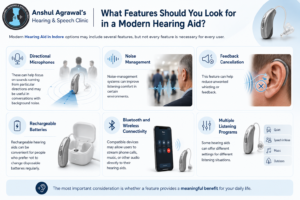
What Features Should You Look for in a Modern Hearing Aid?
Modern Hearing Aid in Indore options may include several features, but not every feature is necessary for every user.
Directional Microphones
These can help focus on sounds coming from particular directions and may be useful in conversations with background noise.
Noise Management
Noise-management systems can improve listening comfort in certain environments.
Feedback Cancellation
This feature can help reduce unwanted whistling or feedback.
Rechargeable Batteries
Rechargeable hearing aids can be convenient for people who prefer not to change disposable batteries regularly.
Bluetooth and Wireless Connectivity
Compatible devices may allow users to stream phone calls, music, or other audio directly to their hearing aids.
Multiple Listening Programs
Some hearing aids can offer different settings for different listening situations.
The most important consideration is whether a feature provides a meaningful benefit for your daily life.
How Should You Maintain and Clean Your Hearing Aid?
Hearing Aid Maintenance in Indore is important for keeping the device working reliably. Hearing aids are electronic devices and can be affected by moisture, earwax, dust, and improper handling.
General care includes:
- Keep the device clean and
- Follow the manufacturer’s cleaning
- Keep hearing aids away from excessive
- Do not expose them to extreme
- Clean or replace components as
- Recharge the device or replace batteries when
- Store the device safely when not in
- Keep hearing aids away from children and
- Attend recommended servicing
Your audiologist should demonstrate the correct cleaning method because different hearing aid styles have different maintenance requirements.
What Should You Do If Your Hearing Aid Starts Whistling?
Whistling or feedback can occur for several reasons. The hearing aid may not fit correctly, the device may be blocked by earwax, or the settings may need adjustment.
Do not try to make major programming changes yourself. Check that the device is positioned correctly and contact your audiologist if the problem continues.
Persistent feedback can often be addressed through proper fitting, cleaning, or programming adjustments.
 |
How Often Should Hearing Aids Be Serviced?
The appropriate service schedule depends on the hearing aid, how frequently it is used, and the manufacturer’s recommendations.
Regular professional review can help identify:
- Blocked microphones
- Damaged tubing
- Worn components
- Battery problems
- Moisture-related issues
- Changes in hearing
- Programming requirements
Annual review may be appropriate for many prescription hearing aid users, while some people may need earlier appointments if problems occur.
Can Hearing Aids Be Used With Smartphones?
Yes. Many modern digital hearing aids offer wireless or Bluetooth connectivity with compatible smartphones and other devices.
Depending on the model, users may be able to:
- Stream phone calls
- Listen to music
- Control volume
- Change programs
- Use a smartphone application
- Stream television audio
However, compatibility varies by hearing aid model and phone. The audiologist can help determine whether the available connectivity features are useful for your requirements.
What Are the Benefits of Using Hearing Aids?
A properly selected and fitted hearing aid can help improve access to speech and everyday sounds. Research and clinical guidance indicate that hearing aids can improve
hearing-related quality of life and listening ability for many people with hearing loss. Potential benefits include:
- Better access to conversations
- Improved speech understanding
- Easier telephone communication
- Greater awareness of environmental sounds
- Better participation in social activities
- Reduced listening effort in suitable situations
- Improved communication with family
- Greater independence in everyday activities
Results vary depending on the degree and type of hearing loss and the individual’s ability to adapt to amplification.
Why Choose Agrawal Hearing and Speech Clinic for Hearing Aid in Indore?
Agrawal Hearing and Speech Clinic provides hearing and speech care for children, adults, and senior patients in Indore. The clinic is led by Anshul Agrawal, an experienced
audiologist who focuses on hearing assessment, speech and communication concerns, hearing rehabilitation, and related services.
The clinic provides support for:
- Hearing loss assessment
- Hearing aid selection
- Hearing aid fitting
- Hearing aid programming and adjustment
- Hearing rehabilitation
- Speech delay
- Stuttering
- Misarticulation
- Cochlear implant counselling
- Pediatric hearing concerns
- Adult and senior hearing care
The approach combines clinical assessment, modern diagnostic tools, scientific techniques, and patient-friendly guidance. For patients considering a Hearing Aid in Indore, understanding the hearing loss first is an important part of selecting an appropriate device.
The clinic is located in South Tukoganj near Nath Mandir Road, Indore, and provides hearing and speech-related care for different age groups.
When Should You Consider Getting a Hearing Aid?
You may want to discuss hearing aids with an audiologist if you frequently:
- Ask people to repeat themselves
- Increase television volume
- Struggle to understand speech in groups
- Have difficulty hearing on the telephone
- Miss environmental sounds
- Avoid social conversations
- Feel tired after trying to follow conversations
- Have diagnosed hearing loss
- Notice that hearing difficulties affect your daily life
A hearing test should come before choosing a device because hearing aids are not suitable for every type of hearing problem.
What Questions Should You Ask Before Buying a Hearing Aid?
Before purchasing a Hearing Aid in Indore, patients should understand what they are receiving and what support is included.
Ask the audiologist:
- What type of hearing loss do I have?
- Do I need one or two hearing aids?
- Which style is suitable for my hearing loss?
- Which features are actually useful for my lifestyle?
- Is there a trial period?
- What happens if the device does not suit me?
- How many fitting or adjustment visits are included?
- What is covered under the warranty?
- What maintenance is required?
- What are the repair and servicing options?
- How long will the device typically last?
- Is smartphone connectivity compatible with my phone?
Price should not be the only factor. A more expensive device is not necessarily the best device for every individual.
Can Hearing Aids Restore Normal Hearing?
No. Hearing aids do not restore natural hearing or reverse the underlying damage that caused most permanent hearing loss. They improve access to sound by amplifying and processing sounds according to the user’s hearing needs.
This is why realistic expectations are important. A person may hear better with a hearing aid but may still have difficulty understanding speech when several people are talking simultaneously or when there is significant background noise.
Proper fitting, realistic expectations, consistent use, and follow-up can improve the overall hearing aid experience.
Can Hearing Aids Help Older Adults Stay Connected?
Hearing difficulties can make conversations with family and friends challenging, particularly when communication takes place in groups or noisy environments.
Appropriate amplification can make speech and environmental sounds more accessible, which may make everyday communication easier for many older adults.
However, hearing aids work best as part of a broader hearing rehabilitation approach that includes communication strategies, realistic expectations, and regular follow-up.
Take the First Step Towards Better Hearing With a Hearing Aid in Indore
Choosing a hearing aid should not be based only on appearance, brand, or price. The right device depends on the individual’s hearing loss, lifestyle, communication needs, comfort, ability to handle the device, and desired features.
At Agrawal Hearing and Speech Clinic, Anshul Agrawal provides hearing assessment, hearing aid guidance, speech and hearing care, and communication-related services for children, adults, and seniors. A professional evaluation can help determine whether amplification is appropriate and which type of device may suit your needs.
If hearing difficulties are affecting your conversations, work, social life, or everyday activities, a comprehensive hearing assessment can be an important first step toward better communication.
FAQs on Hearing Aid in Indore
1. What is a Hearing Aid in Indore and how does it work?
A Hearing Aid in Indore is a small electronic device that makes selected sounds louder and more accessible to people with hearing loss. It generally uses microphones, digital processing or amplification, and a receiver to deliver processed sound to the ear.
2. What are the main types of hearing aids?
Common types include behind-the-ear (BTE), receiver-in-canal (RIC), in-the-ear (ITE),
in-the-canal (ITC), and completely-in-canal (CIC) devices. The appropriate style depends on hearing loss, ear anatomy, lifestyle, comfort, and handling ability.
3. Are Digital Hearing Aids in Indore better than analog devices?
Digital Hearing Aids in Indore provide more flexible sound processing and programming than traditional analog devices. However, the best option depends on individual hearing needs rather than technology alone.
4. What is Hearing Aid Fitting in Indore?
Hearing Aid Fitting in Indore involves programming and physically fitting the device according to the person’s hearing loss and comfort. It may also include verification, user instruction, and follow-up adjustments.
5. Why is Hearing Aid Trial in Indore important?
A Hearing Aid Trial in Indore allows users to experience the device in everyday environments when a trial arrangement is available. It can help identify whether the hearing aid is comfortable and useful for conversations, television, phone calls, and other situations.
6. How long does it take to adjust to a new hearing aid?
Adjustment varies from person to person. Some people adapt relatively quickly, while others need several weeks or longer. Consistent use and appropriate follow-up can support the adaptation process.
7. What is Hearing Aid Adjustment in Indore?
Hearing Aid Adjustment in Indore involves changing the device’s programmed settings based on the user’s hearing needs and real-world experience. Fine-tuning may be required after the person begins using the device regularly.
8. How should I maintain my hearing aid?
Hearing Aid Maintenance in Indore generally includes keeping the device clean and dry, protecting it from moisture and extreme temperatures, replacing or charging batteries, and following manufacturer and audiologist instructions.
9. Can hearing aids be used with smartphones?
Many modern hearing aids can connect wirelessly to compatible smartphones. Depending on the device, users may be able to stream phone calls, music, television audio, or control settings through an application.
10. Do I need one or two hearing aids?
If both ears have hearing loss that can benefit from amplification, two hearing aids are often considered because binaural hearing can support speech understanding and sound localization. Your audiologist can make an individual recommendation.
11. Can hearing aids completely cure hearing loss?
No. Hearing aids do not cure or reverse permanent hearing loss. They help make sounds more accessible and can improve communication for many people with appropriate types of hearing loss.
12. Who should select and fit my hearing aid?
An audiologist can perform a hearing evaluation, recommend suitable amplification, fit and program the device, and provide follow-up adjustments and maintenance guidance.
13. What should I consider before buying a Hearing Aid in Indore?
Consider your hearing loss, lifestyle, communication requirements, device comfort, handling ability, useful features, trial policy, warranty, servicing, maintenance, and long-term support. Cost should not be the only deciding factor.
14. Why choose Anshul Agrawal for Hearing Aid in Indore?
Anshul Agrawal is an experienced audiologist associated with Agrawal Hearing and Speech Clinic in South Tukoganj, Indore. The clinic provides hearing assessment, hearing aid guidance, speech and hearing care, and related communication services for children, adults, and seniors.
15. Is Hearing Aid Maintenance in Indore necessary even when the device is working properly?
Yes. Regular care helps protect the device from moisture, earwax, dust, and component wear. Professional servicing can also identify problems before they significantly affect performance.
16. Can Hearing Aid Trial in Indore help me choose between different devices?
When a trial is available, it can provide useful real-world information about comfort, speech understanding, sound quality, and usability. Discuss the trial duration, return conditions, and adjustment support with the audiologist before purchase.
Conclusion – Hearing Aids for Hearing Loss: Types, Benefits, Fitting and How to Choose the Right One
A Hearing Aid in Indore can be an important hearing rehabilitation option for people whose hearing loss affects everyday communication. However, selecting the right device involves much more than choosing a particular size or brand. Hearing assessment, appropriate device selection, professional fitting, real-world trial, follow-up adjustment, and regular maintenance all contribute to a better hearing aid experience.
Modern digital devices offer a wide range of features, including noise management, directional microphones, rechargeable power, feedback reduction, and wireless connectivity. These technologies can be useful, but the most advanced device is not automatically the most suitable one. The right hearing aid should match the person’s hearing loss, communication requirements, lifestyle, comfort, and ability to use and maintain the device.
At Agrawal Hearing and Speech Clinic, Anshul Agrawal provides hearing assessment and hearing-care guidance using modern diagnostic tools and individualized recommendations. For individuals experiencing difficulty hearing conversations, television, phone calls, or everyday sounds, a professional hearing evaluation can help determine whether hearing aids may be appropriate and which type may best fit their needs.