Stammering Treatment in Indore can help children, teenagers and adults who experience interruptions in the natural flow of speech. Stammering, also known as stuttering, may involve repeating sounds or words, prolonging sounds, or experiencing blocks when trying to speak. These difficulties can affect classroom participation, workplace communication, social interactions and confidence.
At Anshul Agrawal Hearing and Speech Clinic, led by Anshul Agrawal, speech and hearing care focuses on assessing communication difficulties and providing appropriate guidance for individuals and families. Located in South Tukoganj near Nath Mandir Road, Indore, the clinic’s profile describes services for children and adults with speech, language and hearing concerns. Patients should confirm the availability of a specific stammering programme before booking.
Stammering is not a sign of low intelligence, poor understanding or a lack of effort. It is a speech fluency difference that can vary from one person to another and from one situation to another. Some people experience more difficulty when speaking in front of a group, answering questions or talking to unfamiliar people. Others may notice stammering during ordinary conversations as well. With a suitable assessment and an individualised plan, people can learn strategies to manage speech difficulties, communicate more comfortably and address the impact stammering has on everyday life.
What Is Stammering?
Stammering is a speech fluency disorder in which the smooth flow of speech is interrupted. It commonly begins during childhood, although its course and severity differ between individuals. Some children experience periods of disfluency as their speech and language skills develop, while others have persistent stammering that benefits from professional assessment.
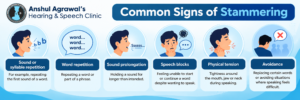
Stammering may include:
- Sound or syllable repetition: For example, repeating the first sound of a word.
- Word repetition: Repeating a word or part of a phrase.
- Sound prolongation: Holding a sound for longer than intended.
- Speech blocks: Feeling unable to start or continue a word despite wanting to speak.
- Physical tension: Tightness around the mouth, jaw or neck during speaking.
- Avoidance: Replacing certain words or avoiding situations where speaking feels difficult.
Not every person experiences all these features. Stammering can also vary according to the speaking situation, emotional pressure, fatigue and other individual factors.
Stuttering Treatment in Vijay Nagar, Indore may be a search used by individuals and families looking for help with these difficulties. When choosing a provider, it is important to consider the therapist’s qualifications, experience with fluency disorders and ability to tailor assessment and therapy to the person’s age and needs.
What Causes Stammering?
There is no single cause of developmental stammering. Research suggests that a combination of genetic, neurological and developmental factors may contribute. Stammering is not caused simply by nervousness, poor parenting or a lack of practice.
1. Developmental Factors
Stammering often begins in early childhood while speech and language abilities are developing. Many children experience temporary disfluencies, but repeated sound prolongations, blocks, visible struggle or persistent concerns may warrant an assessment by a qualified speech-language therapist.
2. Family History
Stammering can occur in multiple members of a family. A family history may be one factor considered during an assessment, although it does not determine whether a child will stammer or how long it will continue.
3. Speech and Language Development
Children develop speech coordination at different rates. Stammering is not simply the result of thinking faster than speaking, and a child should not be blamed for having difficulty producing fluent speech.
4. Stress and Speaking Pressure
Stress does not explain every case of stammering, but pressure, fear of being judged or demanding speaking situations can make stammering more noticeable for some people. Supportive communication and appropriate therapy may help reduce the additional burden associated with these situations.
5. Acquired Stammering
Less commonly, stammering-like difficulties can develop following a neurological event, head injury or certain medical conditions. Sudden changes in speech, especially alongside weakness, facial drooping, confusion or severe headache, require urgent medical assessment rather than a routine speech therapy appointment.
When Should You Seek Stammering Treatment?
An assessment may be helpful when stammering persists, causes distress or affects participation in everyday activities. Parents may also seek guidance if a child becomes frustrated while speaking, avoids talking or shows physical tension during speech.
Speech Therapy for Stammering in South Tukoganj, Indore may be relevant to people looking for local professional guidance. An assessment can help clarify the nature of the disfluency, its impact and whether therapy or monitoring is appropriate.
Consider seeking professional advice if:
- Stammering continues or becomes more noticeable over time.
- The person struggles to begin words or experiences frequent blocks.
- Speaking causes visible tension or frustration.
- A child begins avoiding conversations or classroom activities.
- An adult feels restricted during interviews, meetings or social interactions.
- The person fears speaking because of previous negative experiences.
- Family members are unsure how to respond supportively.
There is no need to wait until stammering becomes severe before asking for advice. Early guidance can help families understand what they are observing and decide on appropriate next steps.
How Is Stammering Assessed?
A speech-language therapist typically begins by discussing the person’s speech history, communication concerns and situations in which stammering is more noticeable. For children, the assessment may also include information from parents or caregivers about speech development and family history.
A comprehensive assessment may consider:
- The types and frequency of speech disfluencies.
- The presence of repetitions, prolongations or blocks.
- Physical tension or associated movements.
- The effect of stammering on confidence and participation.
- The person’s feelings and attitudes about speaking.
- Communication needs at home, school, college or work.
- Previous speech therapy and any strategies already being used.
A Stammering Speech Therapist in Palasia, Indore may be a local search term for people seeking this type of assessment. Regardless of location, the important step is to find a qualified professional who can distinguish typical developmental disfluencies from persistent stammering and recommend an appropriate plan. Assessment is not about judging how well a person speaks. Its purpose is to understand the individual’s communication profile and identify practical goals.
Stammering Treatment Options
There is no single treatment approach that works identically for everyone. Therapy depends on the person’s age, speech patterns, goals, preferences and the impact of stammering on daily life.
1. Speech Fluency Strategies
Some therapy approaches teach techniques that can help people modify the way they speak. Depending on the individual’s needs, these may include practising a comfortable speaking pace, gentle speech initiation, smooth transitions between sounds and coordinated breathing.
These techniques should be introduced and practised with professional guidance. The goal is not to force a person to speak perfectly or constantly monitor every word. Treatment should support comfortable, effective communication.
2. Stuttering Modification
Stuttering modification approaches help individuals understand their stammering and reduce the struggle or tension associated with it. Therapy may address physical effort, fear of stammering and strategies for managing difficult speaking moments.
For some people, learning to communicate more comfortably while stammering may be as important as changing speech fluency.
3. Communication Confidence and Emotional Support
Stammering can affect confidence, especially if a person has experienced teasing, interruptions or negative reactions. Therapy may include identifying difficult speaking situations, preparing for conversations and reducing avoidance.
A therapist may also guide family members, teachers or other communication partners on how to create a more supportive environment.
4. Parent-Guided Support for Children
For young children, parent involvement may be an important part of treatment. A therapist may recommend practical changes to family conversations, such as allowing the child time to finish speaking and reducing pressure to answer quickly.
The appropriate approach depends on the child’s age, the pattern of stammering and the results of the assessment.
Stuttering Therapy in Bhawarkua, Indore may be a search used by families exploring treatment options. When considering therapy, ask how the professional will set goals, involve caregivers when appropriate and review progress.
Stammering Treatment for Children
Stammering often begins in childhood, so parents may be unsure whether to wait, monitor speech or seek professional advice. Some children recover naturally, while others continue to stammer. An individual assessment can help parents understand the situation without creating unnecessary pressure for the child.
Signs Parents May Notice
Children may repeat sounds or syllables, prolong sounds, pause unexpectedly or struggle to start a word. Some children may show frustration, avoid certain words or become reluctant to speak in class.
The presence of one sign does not automatically mean a child will have persistent stammering. A qualified professional can consider the child’s age, speech pattern, duration of symptoms and family history.
How Parents Can Support a Child
Parents can encourage communication by:
- Listening patiently without finishing the child’s sentences.
- Maintaining natural eye contact if the child is comfortable with it.
- Avoiding criticism or telling the child to “speak properly.”
- Giving the child enough time to express ideas.
- Keeping conversations relaxed rather than turning them into speech tests.
- Praising participation and sharing ideas rather than fluency alone.
- Discussing concerns with a qualified speech-language therapist.
Speech Therapy for Stuttering in Nipania, Indore may be relevant for parents searching for child or family support. The most appropriate therapy plan should be based on an assessment rather than assumptions about the child’s age or the severity of the problem.
Can Children Outgrow Stammering?
Some children stop stammering as they grow, while others continue to experience it. It is not possible to predict every child’s course with certainty. Parents should seek guidance if stammering persists, worsens, causes distress or affects participation.
Professional advice can help determine whether active treatment or monitoring is suitable and provide parents with strategies to support communication.
Stammering Treatment for Teenagers and Adults
Stammering does not always disappear with age. Teenagers and adults may experience challenges in interviews, presentations, telephone calls, meetings or everyday conversations. Some may speak fluently in certain situations but stammer more noticeably in others.
Stammering Treatment for Children and Adults in Rau, Indore may be a relevant local search for people seeking age-appropriate support. Therapy for older children and adults often takes their personal communication goals and experiences into account.
Treatment may focus on:
- Understanding individual speech patterns.
- Practising fluency techniques when useful.
- Reducing excessive physical tension during speech.
- Preparing for presentations, interviews or important conversations.
- Managing avoidance and communication-related anxiety.
- Developing self-advocacy and confidence.
- Communicating effectively even when stammering occurs.
For adults, the aim is not necessarily to eliminate every moment of stammering. It may be to reduce struggle, increase choice and help the person communicate in ways that align with their goals.
How Fluency Therapy Works
Fluency therapy is not simply a set of exercises to repeat at home. It generally involves assessment, guided practice, feedback and strategies for using skills in real-life situations.
Fluency Therapy for Stuttering in Bengali Square, Indore may be a search used by people exploring specialised speech support. A therapist may select one or more approaches depending on the person’s needs.
Structured Speech Practice
A session may begin with easier speaking tasks and gradually move toward more natural conversation. The therapist may help the person notice speech patterns, practise selected techniques and identify which methods feel useful.
Everyday Communication Practice
Skills can then be practised in situations such as describing an event, asking a question, making a phone call or participating in a conversation. Progress should be reviewed in terms of both speech and the person’s comfort with communication.
Managing Speaking Situations
Some individuals avoid speaking because they expect to stammer. Therapy may help them prepare for challenging situations, explore their concerns and communicate more willingly. Emotional support or referral to another professional may be appropriate if anxiety significantly affects daily life.
Home Practice
A therapist may recommend brief, realistic activities between sessions. These should be manageable and relevant to the person’s goals rather than becoming a source of pressure.
What Makes a Speech Therapy Plan Effective?
A useful therapy plan should be personalised, practical and reviewed regularly. Stammering varies significantly, so a strategy that helps one person may not be equally helpful to another. When exploring Stammering Treatment in Indore, consider whether the therapist explains the assessment findings clearly, discusses realistic goals and adapts activities to the person’s communication needs.
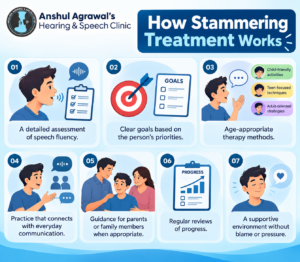
Important elements of a suitable plan include:
- A detailed assessment of speech fluency.
- Clear goals based on the person’s priorities.
- Age-appropriate therapy methods.
- Practice that connects with everyday communication.
- Guidance for parents or family members when appropriate.
- Regular reviews of progress.
- A supportive environment without blame or pressure.
People searching for a Speech Therapist for Stammering in Saket Nagar, Indore can ask about the therapist’s experience with fluency disorders, the assessment process and how progress is measured. Confirm the professional’s qualifications and whether the services meet the individual’s needs.
About Anshul Agrawal Hearing and Speech Clinic
Anshul Agrawal Hearing and Speech Clinic provides hearing and speech-related care in Indore. The supplied clinic profile describes Anshul Agrawal as an experienced audiologist working with children, adults and older people, with services related to speech difficulties, hearing loss and communication development. For anyone considering Stammering Treatment in Indore, it is important to confirm that the clinic currently offers dedicated stammering assessment and treatment for the relevant age group. A clinic’s general speech and hearing services do not automatically confirm that every specialised fluency programme is available. When contacting a clinic, explain whether the concern involves sound repetitions, prolonged sounds, speech blocks, physical tension or avoidance of speaking. This information can help establish whether the clinic can provide an appropriate assessment or recommend a suitable specialist.
Choosing Care Based on Your Needs
Someone searching for Stuttering Treatment in Vijay Nagar, Indore may prioritise access to a nearby provider, while another person may prefer a therapist with specific experience in childhood or adult fluency disorders. Families considering Speech Therapy for Stammering in South Tukoganj, Indore can ask whether parent guidance is included when a child is receiving treatment. For individuals seeking a Stammering Speech Therapist in Palasia, Indore, it may be useful to ask how therapy addresses both speech patterns and the impact of stammering on everyday communication.
People exploring Stuttering Therapy in Bhawarkua, Indore should check whether the treatment approach is tailored to the individual’s assessment findings rather than relying on a standard programme. Parents looking for Speech Therapy for Stuttering in Nipania, Indore can ask how the therapist involves caregivers and supports communication at home. For families comparing Stammering Treatment for Children and Adults in Rau, Indore, age-specific experience and individualised treatment planning are important considerations. People interested in Fluency Therapy for Stuttering in Bengali Square, Indore may wish to understand how practice sessions connect with conversations at school, work or home.
Frequently Asked Questions About Stammering
1. Is stammering the same as stuttering?
Yes. Stammering and stuttering are different terms commonly used for the same speech fluency disorder. Terminology varies by region, but both describe interruptions such as repetitions, prolongations and blocks.
2. Does stammering mean a person is nervous or lacks confidence?
No. Stammering is not simply caused by nervousness or a lack of confidence. However, stress and fear of negative reactions may make speaking more difficult for some people.
3. Can stammering return after improvement?
Speech fluency can vary over time and across situations. A person may experience more difficulty during demanding conversations or periods of stress. A therapist can help identify useful strategies if difficulties return or change.
4. Should teachers correct a child who stammers?
Teachers should generally avoid interrupting, criticising or pressuring a child to speak fluently. Allowing time to respond, listening attentively and maintaining a respectful classroom environment can help support communication.
5. Are breathing exercises alone enough to treat stammering?
Not necessarily. Breathing and speech coordination may be included in some therapy approaches, but stammering treatment should be based on an assessment. Breathing exercises alone are not a universal solution.
6. How often should someone attend speech therapy?
The recommended frequency depends on the person’s age, needs, goals and response to treatment. The therapist can discuss an appropriate schedule and review it as progress develops.
7. Can adults benefit from speech therapy even if they have stammered since childhood?
Yes. Adults can seek assessment and learn strategies to manage stammering, reduce speaking-related struggle and work toward personal communication goals. Improvement varies, and complete fluency cannot be guaranteed.
8. How can I prepare for a first appointment?
Write down when stammering began, the situations in which it occurs and how it affects everyday communication. For children, parents can share developmental history and observations. You can also prepare questions about assessment, therapy methods and expected progress.
9. How do I find a qualified stammering therapist in Indore?
Check the professional’s qualifications, experience with fluency disorders, assessment process and approach to personalised treatment. Confirm the clinic’s current services before booking an appointment.
Conclusion – Stammering Treatment in Indore
Stammering Treatment in Indore can help children and adults understand their speech difficulties and develop strategies for more comfortable, effective communication. The appropriate approach depends on the person’s age, speech patterns, communication goals and the impact of stammering on daily life.
Anshul Agrawal Hearing and Speech Clinic in South Tukoganj provides speech and hearing-related services, according to the supplied clinic information. Individuals and families should confirm the availability of specialised stammering therapy and arrange an assessment with an appropriately qualified professional. Stammering should never be treated as a personal failing. Patient support, realistic goals and individualised guidance can help people participate more confidently in conversations at home, school, work and in the wider community.