Speech Therapy for Adults After Stroke in Indore: Recovery, Communication and Rehabilitation
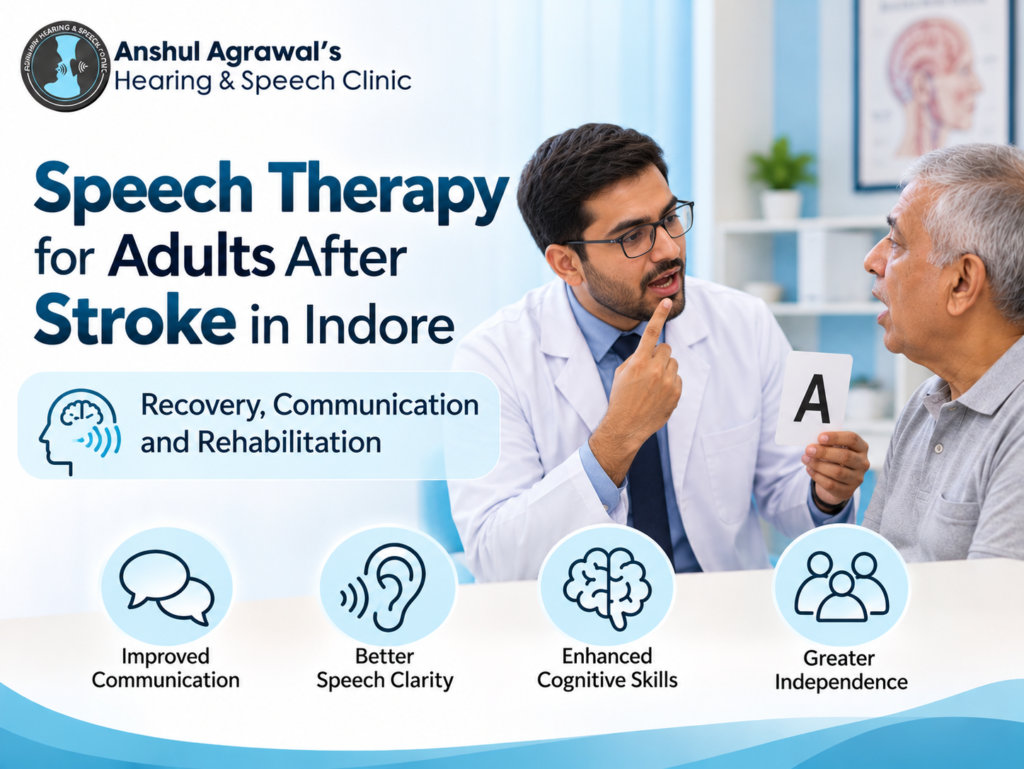
Speech Therapy for Adults After Stroke in Indore plays an important role in helping stroke survivors improve communication, speech clarity, language understanding and, when needed, swallowing function. A stroke can affect the parts of the brain responsible for speaking, understanding language, reading, writing and coordinating the muscles involved in speech. With appropriate assessment and an individualised rehabilitation plan, many people can work toward improving their communication skills and participating more confidently in daily life. At Anshul Agrawal Hearing and Speech Clinic, Anshul Agrawal focuses on hearing, speech and communication care for children and adults. The clinic, located in South Tukoganj near Nath Mandir Road, provides services related to speech difficulties, communication disorders and hearing rehabilitation. After a stroke, communication challenges can affect conversations with family members, social interactions, independence and emotional well-being. Some people know what they want to say but struggle to find the correct words, while others may have difficulty understanding spoken language or producing clear speech. The type of difficulty varies from person to person, which is why professional assessment is important. This guide explains the common speech and language problems that can occur after a stroke, how speech therapy works, what recovery may involve and how families can support rehabilitation. What Happens to Speech and Communication After a Stroke? A stroke occurs when the blood supply to part of the brain is interrupted or when bleeding damages brain tissue. Since different areas of the brain control different functions, the communication problems that follow depend on the location and extent of the injury. Some stroke survivors experience difficulty forming words, while others struggle to understand sentences, read written information or express their thoughts. A person may also have problems controlling the muscles required for clear speech. Speech Therapy for Adults After Stroke in Indore begins with understanding the specific communication challenges a person is experiencing. An assessment can help identify the skills that need attention and establish practical rehabilitation goals. Common changes after a stroke include: Difficulty finding the right words. Slurred or unclear speech. Trouble understanding conversations. Difficulty reading or writing. Problems forming complete sentences. Reduced ability to participate in group conversations. Changes in voice quality or speech rhythm. Difficulty communicating needs, emotions or preferences. Not every stroke survivor develops these difficulties. Some people experience mild changes, while others need a longer period of rehabilitation and ongoing support. Common Speech and Language Disorders After Stroke 1. Aphasia Aphasia is a language disorder that can develop when a stroke damages brain regions involved in language processing. It can affect speaking, understanding, reading and writing. A person with aphasia may understand an idea but struggle to find the words needed to express it. Another person may speak fluently but have difficulty understanding what others are saying. Aphasia does not necessarily mean that a person’s intelligence has been affected. The person may continue to understand situations and emotions even when communicating those thoughts becomes difficult. 2. Dysarthria Dysarthria is a motor speech disorder caused by weakness or reduced coordination of the muscles used for speaking. Speech may sound slurred, slow, quiet or difficult to understand. Therapy may focus on improving breath support, speech clarity, articulation, speaking rate and coordination, depending on the individual’s abilities. 3. Apraxia of Speech Apraxia of speech affects the brain’s ability to plan and sequence the movements needed for speech. A person may know what they want to say but struggle to produce the sounds in the correct order. Treatment may involve repeated, structured speech practice and techniques that help the person plan and produce speech movements more accurately. 4. Cognitive-Communication Difficulties Some stroke survivors experience difficulties with attention, memory, organisation or interpreting information. These changes can make conversations and everyday communication more challenging. Therapy may include strategies for following conversations, organising thoughts, remembering important information and communicating effectively in real-life situations. Who Needs Speech Therapy After a Stroke? Speech and language rehabilitation may be appropriate for adults who experience new communication difficulties following a stroke. The need for therapy depends on the person’s symptoms, medical condition, assessment results and rehabilitation goals. A speech-language professional may recommend an evaluation if a person: Has difficulty speaking clearly. Struggles to find or remember words. Cannot easily understand spoken instructions. Has difficulty reading messages or writing sentences. Finds telephone conversations challenging. Avoids social situations because of communication difficulties. Has trouble communicating basic needs. Experiences changes in speech coordination. Stroke Speech Therapy in Vijay Nagar, Indore may be a relevant local search for families looking for rehabilitation support after a stroke. However, the most suitable service should be selected based on the patient’s clinical needs, the therapist’s qualifications and the availability of appropriate assessment and treatment. If speech or language difficulties begin suddenly, particularly with facial weakness, arm weakness, confusion or loss of balance, seek emergency medical care immediately. Do not wait for a routine therapy appointment. How Speech Therapy Helps Adults Recover After a Stroke Speech therapy is designed around the person’s communication abilities, challenges and everyday needs. It does not follow the same routine for every stroke survivor. A therapist first evaluates the person’s speech, language, understanding and other relevant communication skills before recommending treatment activities. Speech Therapy for Adults After Stroke in Indore may involve several approaches, depending on the type of impairment. Improving Word Finding and Sentence Formation Some people know what they want to communicate but cannot easily retrieve the words they need. Therapy may use pictures, naming exercises, word associations, sentence completion and conversation practice to strengthen communication skills. For example, a person might practise naming familiar objects, describing a daily activity or forming sentences about a photograph. Activities can gradually become more challenging as the person’s abilities and goals develop. Improving Speech Clarity When muscle weakness or coordination affects speech, therapy may focus on clear sound production, speaking at a manageable pace and coordinating breathing with speech. A therapist may practise useful words and short sentences before introducing longer conversations. The aim is to help the individual communicate more effectively in